Prompt Patterns for Reviewable, Production-Ready Code
A practical prompt structure for coding agents: live context, real constraints, side-effect boundaries, observable acceptance evidence, and reproducible handoffs.
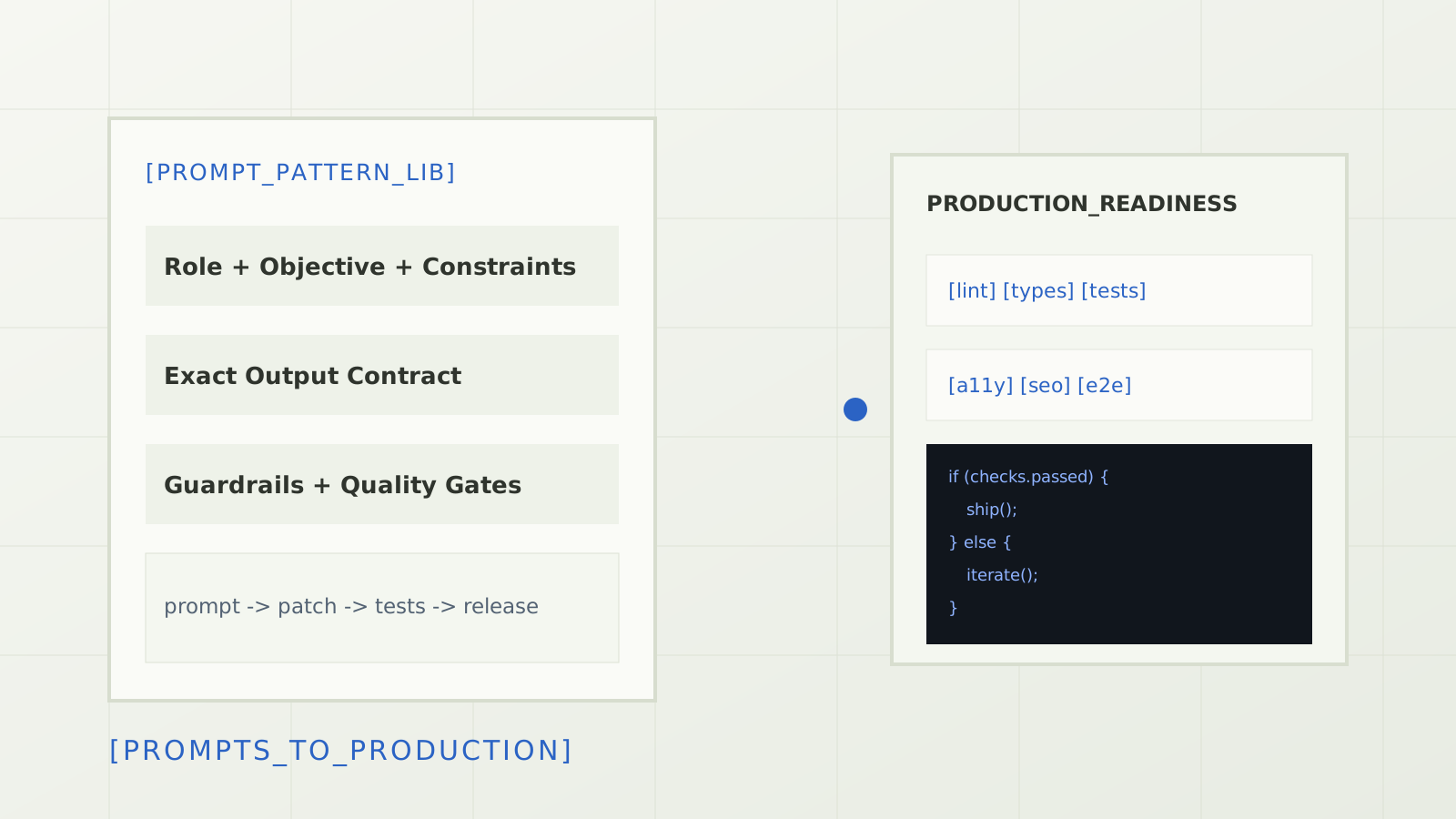
[systems debrief] 5 sections
No prompt produces production-ready code by itself. A good prompt can make the work more reviewable: it gives the agent the right context, narrows the allowed change, and defines what evidence should exist before anyone calls the task complete.
The patterns I reuse are less about magic wording and more about an engineering contract between the requester and the tool.
01. Start with the outcome and the live context
State the user-visible or system-visible outcome first. Then point the agent at the repository and require it to inspect the existing path before proposing a solution. This prevents a familiar failure: solving a generic version of the problem while ignoring the architecture already in front of it.
Outcome
The published blog must exclude hidden drafts.

Context
SQLite is the authoring source. GitHub Pages serves only static files.
Inspect the current generator and publication verifier before editing.
02. Write constraints as decisions
Useful constraints remove choices that have already been made. They name the source of truth, existing project patterns, compatibility boundaries, and actions that are outside the task.
- Preserve unrelated dirty changes.
- Reuse the existing model or helper when the behavior already matches.
- Do not move an API call until its server-side effect is understood.
- Do not commit, push, publish, or message another person unless requested.
- Keep the change narrow enough that a reviewer can explain it.
A constraint should protect a real boundary. A giant style guide pasted into every request mostly adds noise; a sentence identifying the canonical data source can prevent an entire wrong design.
03. Ask for a loop, not a one-shot answer
I ask the agent to inspect, make the smallest useful change, run the relevant checks, and report what remains uncertain. If the evidence changes the diagnosis, the plan should change with it.
- Inventory the owning files and current state.
- State the assumption that determines the implementation.
- Patch the narrow path that satisfies the outcome.
- Run checks proportionate to the behavior and risk.
- Review the diff for accidental scope and context leakage.
- Leave reproducible handoff evidence.
04. Define “done” with observable evidence
“Make sure it works” is too vague. Name the proof that would convince a reviewer: a focused unit test, a successful build task, an HTTP response, a database assertion, a screenshot of the final state, or a remote check after publishing.
A useful acceptance block distinguishes:
- code evidence: the changed path behaves as intended;
- integration evidence: surrounding systems still agree;
- user-visible evidence: the final state is actually observable;
- delivery evidence: a commit, PR, or deployment exists only if that action was requested and verified.
05. Use a compact reusable template
Outcome:
Context to inspect:
Constraints and non-goals:
Known side effects:
Acceptance evidence:
Allowed external actions:
Handoff format:
The template is intentionally short. The repository supplies most of the detail; the prompt tells the agent where to look, which boundaries matter, and how the work will be judged.
Production readiness still comes from review, testing, and operational judgment. The prompt's job is to make those steps harder to skip.