Using Emergenetics and Harrison as Calibration Tools
How I use two assessment profiles as prompts for better decisions and communication—without treating their scores as identity or proof of ability.
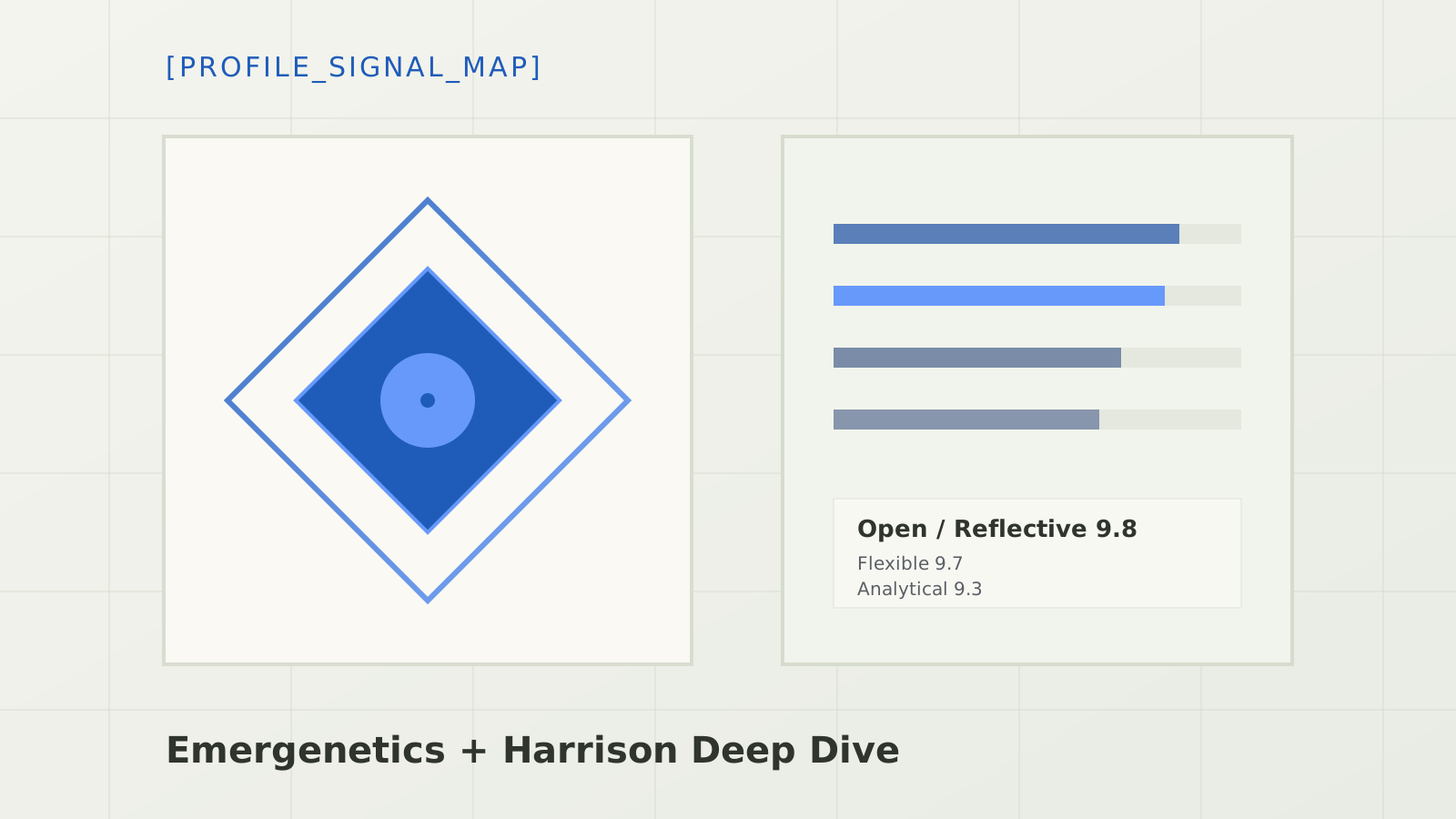
[reflection light cone] 4 sections
I treat assessment results as prompts for reflection, not measurements of engineering ability. They do not prove how I will behave in every situation, and they are not a substitute for feedback from people who have worked with me. Their value is narrower: they give me language for tendencies I can compare against actual delivery.
The two artifacts I revisit are an Emergenetics profile and a Harrison Assessment report. I use them to ask practical questions about decision-making, communication, and the conditions under which a strength can become a blind spot.
01. Emergenetics: thinking preferences
My recorded thinking mix is Analytical 33%, Conceptual 32%, Structural 20%, and Social 15%. I read that as a preference for exploring a problem broadly, testing the logic, and then giving the decision enough structure to survive implementation.
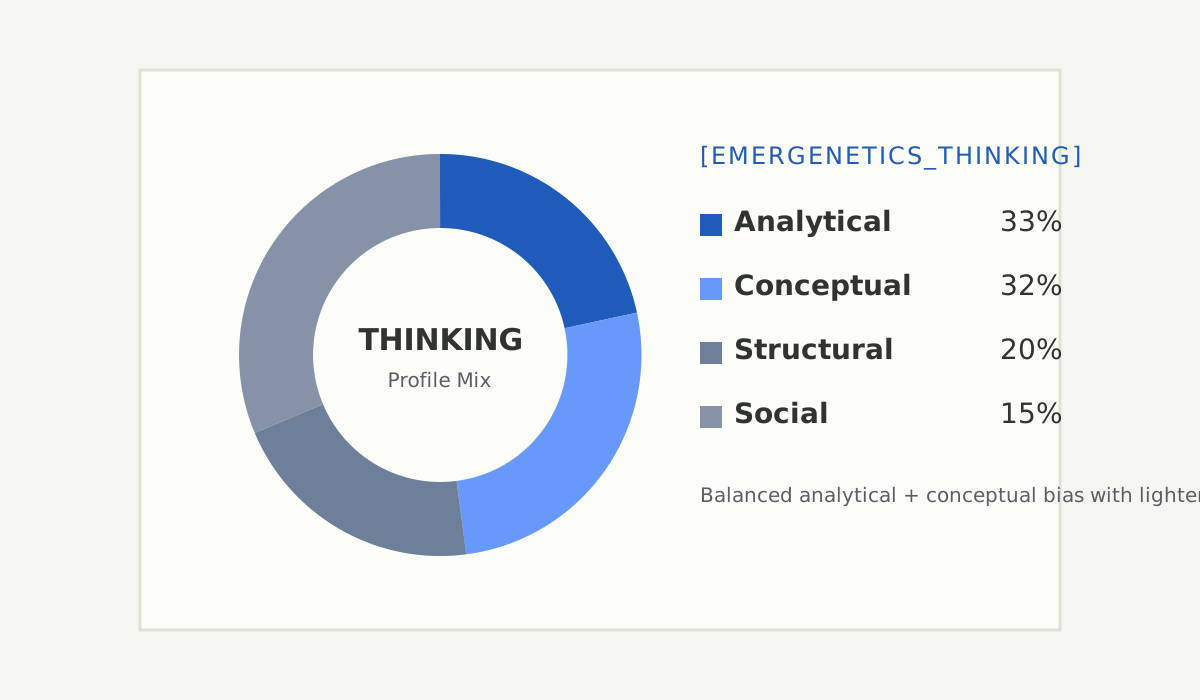
Useful when turning ambiguous product intent into options and explicit tradeoffs.
A reminder to turn the chosen option into milestones, contracts, and checks.
Not a measure of empathy or skill; it reminds me to seek human context deliberately instead of assuming the system view is complete.
The combination works best when exploration has a decision deadline.
02. Emergenetics: behavioral preferences
The report records Expressiveness 49%, Assertiveness 51%, and Flexibility 60%. My practical interpretation is measured communication, balanced advocacy, and a willingness to adjust when the evidence changes.
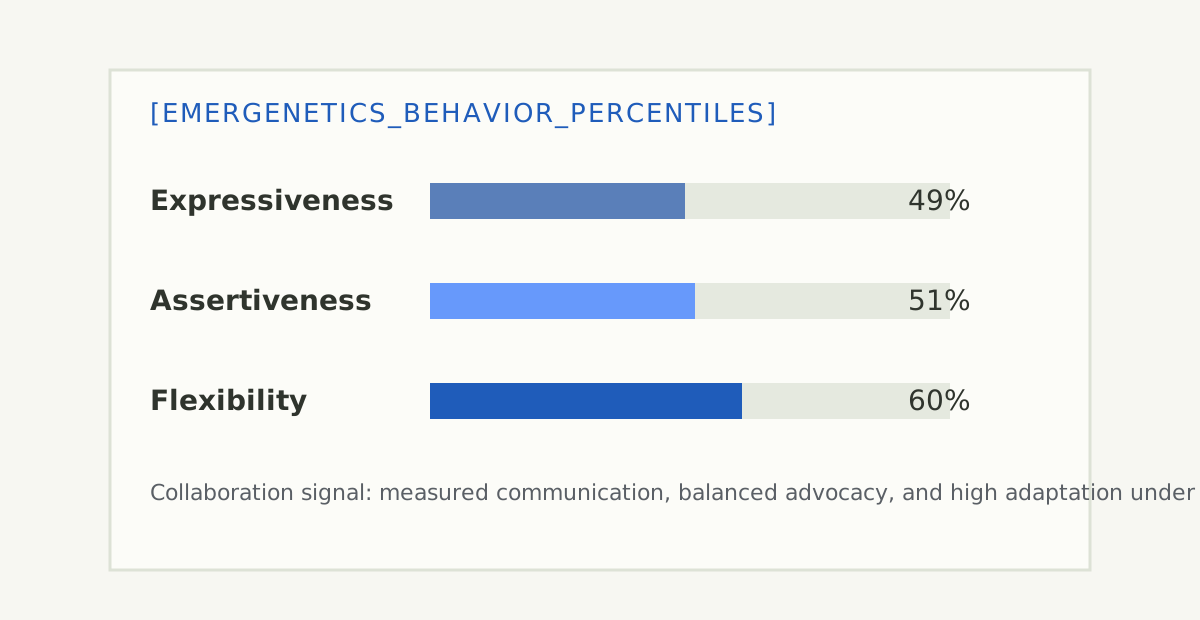
Flexibility helps when plans change, but too much accommodation can blur a decision. The operating habit I use is simple: invite revision while a decision is open, then make the owner, deadline, and reason explicit once it closes.
03. Harrison: strengths and watchpoints
Selected scores in my report include Open / Reflective 9.8, Flexible 9.7, Analytical 9.3, Helpful 8.3, and Optimistic 8.0. A useful watchpoint is Assertive 4.1.
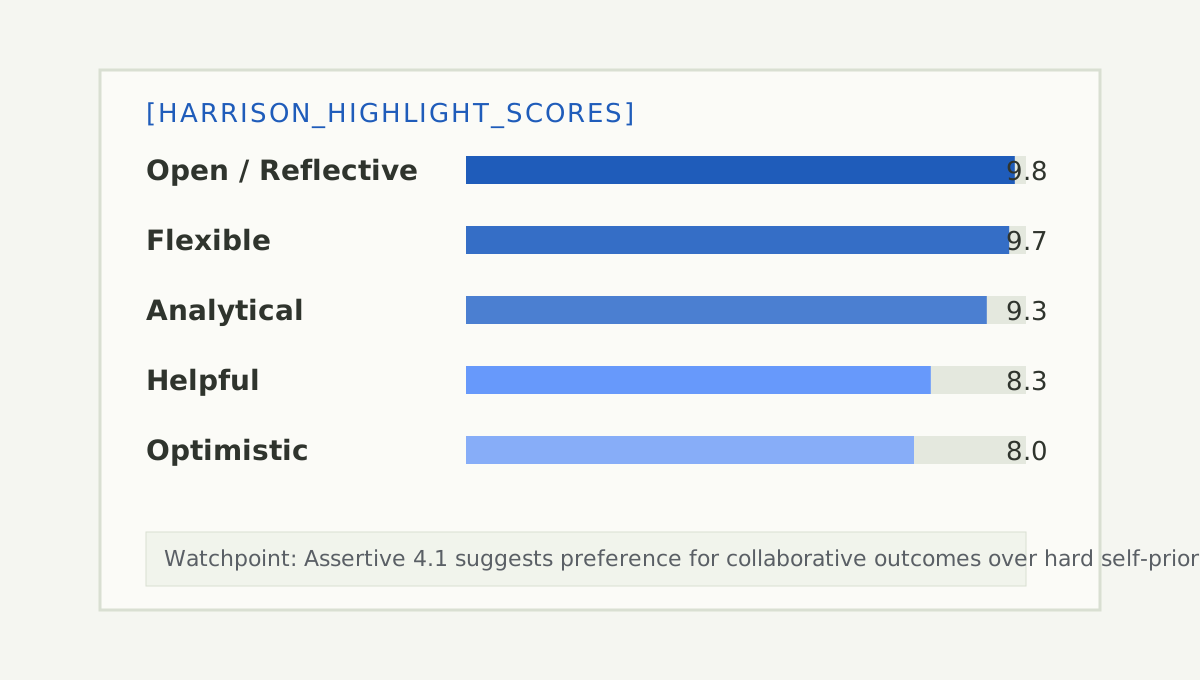
The useful tension is between openness and closure, and between helpfulness and directness. I can take in a wide range of perspectives and still need to state a boundary earlier. Helping a team is not the same as absorbing every priority it produces.
04. Practices I actually use
- Decision logs: record the choice, the reason, and the condition that would reopen it.
- Boundary questions: ask what is explicitly outside the current scope.
- Risk pairing: give each optimistic plan one concrete failure mode and detection signal.
- Conflict hygiene: disagree while the architecture is still cheap to change, then align on execution.
- Post-ship review: compare the expected result with real evidence instead of defending the original plan.
The assessment language is useful only when it changes a behavior I can observe. If a score becomes an excuse—“that is just how I am”—it has stopped being a calibration tool and become another label.